

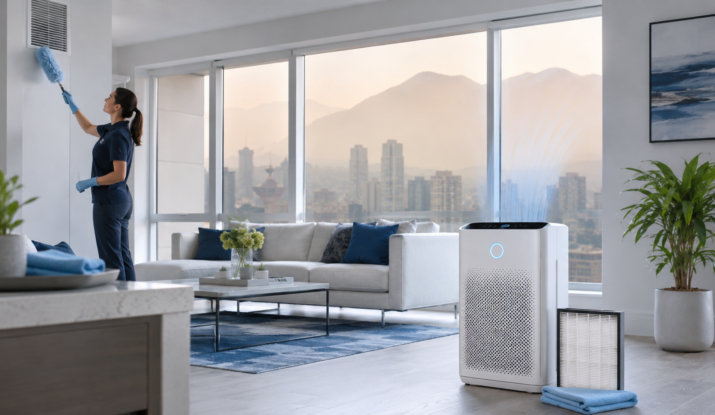
If your view of the North Shore mountains has looked hazy this week, you’re not imagining it. Metro Vancouver issued an air quality advisory for the Eastern Fraser Valley on August 3, 2026, as smoke from wildfires burning across BC’s Southern Interior pushed fine particulate matter to unhealthy levels across the region — with parts of the Fraser Valley reaching a “very high risk” rating.
This isn’t a one-off. Wildfire smoke season now returns to Metro Vancouver almost every summer, and it doesn’t just affect the air outside — it settles into your home. Closed windows help, but they don’t stop everything. Here’s what’s actually happening inside your house during smoke season, and the cleaning steps that make a real difference.
Why Smoke Gets Into Your Home Even With the Windows Shut
Wildfire smoke is made up largely of fine particulate matter known as PM2.5 — particles so small they pass through most standard window seals, door gaps, and building ventilation systems. According to the BC Lung Foundation’s 2026 State of the Air Report, wildfire smoke is a major contributor to poor air quality in the province and has been linked to thousands of premature deaths from heart and lung-related illness over the years.
Provincial health guidance during smoke events recommends keeping windows and doors closed, using a clean, good-quality filter in your ventilation system or a certified portable air cleaner, and staying aware of symptoms even while indoors, since smoke levels can still build up inside your home. HealthLink BC (811) is available if you’re unsure whether smoke exposure requires medical attention.
The problem is that smoke residue doesn’t just float through the air and disappear — it settles. Fine ash and soot particles land on every horizontal surface in your home: countertops, shelves, window sills, and especially soft materials like carpets, curtains, and upholstery, which trap particles far more than hard surfaces do.
What Wildfire Smoke Actually Leaves Behind in Your Home
- A fine layer of ash and soot dust on surfaces, shelves, and electronics
- Smoke odour absorbed into fabric — curtains, sofas, bedding, and carpets hold onto smoke smell long after the outdoor air clears
- Particulate buildup in HVAC filters and vents, reducing how effectively your system filters air going forward
- Residue on window tracks and sills from smoke settling around any small gaps
- Increased dust on hard flooring, which gets kicked back into the air every time someone walks across it
This is why a home can still smell like smoke, or trigger allergy-like symptoms, days after an air quality advisory has lifted — the smoke itself is gone, but the residue it left behind is still circulating.
A Cleaning Checklist for Smoke-Affected Homes
1. Dust from top to bottom, not the other way around
Start with ceiling fans, shelves, and light fixtures, then work down to furniture and finally floors. Dusting bottom-up just resettles particles onto surfaces you already cleaned.
2. Vacuum carpets and upholstery thoroughly
Standard vacuuming helps, but carpets and fabric furniture trap fine particulate matter deep in their fibres. A professional carpet and furniture cleaning treatment lifts embedded smoke particles and odour that a home vacuum can’t fully remove.
3. Wash or professionally clean curtains and soft furnishings
Fabric absorbs smoke odour more than almost anything else in your home. If curtains and cushions still smell smoky after airing out, they likely need a proper wash or steam clean.
4. Wipe down window sills and tracks
This is one of the most commonly missed spots — ash and fine dust collect in window tracks even when the window has stayed shut.
5. Check and replace your HVAC or furnace filter
A clogged filter from smoke season doesn’t just reduce air quality — it makes your system work harder. If you’re not sure how long it’s been since your filter was changed, smoke season is a good trigger to check.
6. Clean outdoor spaces before bringing them “back inside”
Patios, balconies, and outdoor furniture accumulate visible ash during smoke events. Give these a proper clean before the next nice day, so you’re not just moving residue back indoors on shoes and furniture cushions. Our patio and balcony cleaning service handles this in one visit.
Why a Deep Clean Matters More Than a Quick Tidy This Time of Year
A regular light clean handles visible dust, but wildfire smoke residue is finer and more persistent — it settles into places routine cleaning tends to skip: air vents, baseboards, behind furniture, and deep into carpet fibres. A full residential deep cleaning after a smoke event addresses these areas properly, rather than just refreshing what’s visible on the surface.
If you have young kids, older family members, or anyone with asthma or respiratory sensitivities at home, this matters even more — reducing residual particulate matter indoors is one of the few things you have direct control over once an advisory lifts.
Ultra Magic Cleaning: Helping Metro Vancouver Homes Breathe Easier
Ultra Magic Cleaning provides thorough residential cleaning, carpet and furniture cleaning, and patio and balcony cleaning across Metro Vancouver, Coquitlam, and Port Coquitlam — exactly the services that make the biggest difference after a smoke event. Our 5-star Google-rated team knows the areas of a home that need extra attention once wildfire season hits.
Get a Free Quote and let us help clear the residue smoke season leaves behind.
Frequently Asked Questions
Does wildfire smoke really get inside my house if the windows are closed? Yes. Fine particulate matter (PM2.5) is small enough to pass through minor gaps around windows, doors, and ventilation systems, even when everything is kept shut.
How long does smoke smell last in a home after an air quality advisory ends? It varies, but smoke odour can linger for days to weeks if it’s been absorbed into carpets, curtains, and upholstery, since fabric holds onto smoke particles far longer than hard surfaces.
Should I replace my furnace filter after a wildfire smoke event? It’s a good idea to check it. A filter that’s been filtering smoke-heavy air for several days may be more clogged than usual, which reduces its effectiveness going forward.
Can professional carpet cleaning remove wildfire smoke odour? Yes. Deep extraction cleaning reaches particles and odour trapped in carpet fibres that regular vacuuming leaves behind.
Where can I check current air quality advisories for Metro Vancouver? Official advisories are posted on the Province of BC’s Air Quality Warnings page, and current conditions can be checked through Metro Vancouver’s air quality index.